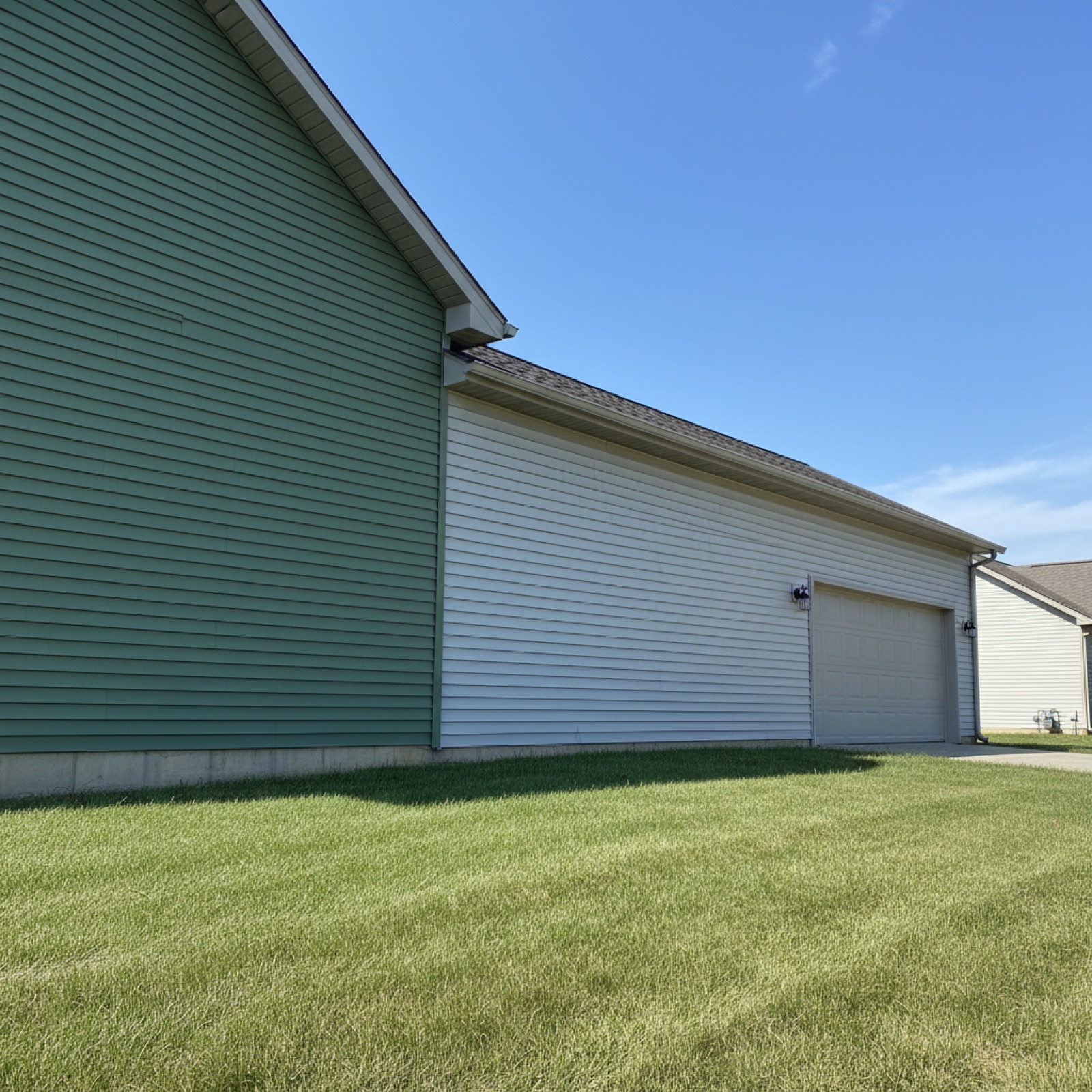
When Central Kentucky homeowners weigh fiber cement vs vinyl siding, the short answer is this: fiber cement is the tougher, longer-lasting choice for homes that see hail, hard freezes, and humid summers, while vinyl wins on upfront price and near-zero upkeep. Both can perform well here when they are installed correctly, so the right pick comes down to your budget, how long you plan to stay, and the look you want for your home.
At MK Contractors LLC, we install vinyl, fiber cement, James Hardie, and LP SmartSide on homes across Nicholasville, Lexington, and the surrounding Central Kentucky area, so we see how each material ages on real houses in our climate. This guide compares the two on weather resistance, lifespan, cost, upkeep, and appearance, then walks through how to decide.
Key Takeaways
If you only have a minute, these are the points that matter most for a Kentucky home:
- Fiber cement resists hail dents, fire, woodpeckers, and warping better than vinyl, which makes it a strong fit for Kentucky’s spring storm season.
- Vinyl costs noticeably less to buy and install, never needs paint, and is the faster project, so it often wins for budget-focused remodels and rental properties.
- Vinyl siding lifespan in our climate commonly runs 20 to 40 years depending on thickness, while well-maintained fiber cement often lasts 30 to 50 years or more.
- Installation quality matters as much as the material, especially flashing and water management around windows and gutters.
How Does Central Kentucky Weather Affect Your Siding Choice?
Kentucky weather is hard on exterior walls because it swings between extremes. According to the NOAA State Climate Summary for Kentucky, annual precipitation ranges from less than 50 inches in the northern part of the state to almost 60 inches in the southeast, and temperatures often fall below 0°F for several days per year in many parts of the state. The same summary notes that the coldest temperature ever recorded in Kentucky was -37°F in Shelbyville in January 1994, just down the road from many of the homes we work on.
That mix creates three real stresses on siding:
- Freeze and thaw. Water that gets behind or into a siding material expands when it freezes. Repeated cycles open gaps, loosen caulk joints, and can swell materials that absorb moisture.
- Temperature swings. Vinyl expands and contracts with heat and cold, which is why it is hung loosely on its nails. A 90-degree July afternoon and a single-digit January night put that movement to work.
- Storms and hail. Spring and early summer thunderstorms bring wind-driven rain and hail. Cold, stiff vinyl is more likely to crack on impact than it is in warm weather.
Humid summers also encourage mildew on shaded walls with either product, so plan on a gentle wash every year or two. If you live in Jessamine County, our team handles siding replacement in Nicholasville and can tell you whether your current siding is letting water in.
Fiber Cement vs Vinyl Siding: How Do They Compare Side by Side?
Fiber cement is made from cement, sand, and cellulose fibers, then pressed into boards that mimic painted wood. Vinyl siding is PVC plastic extruded into panels with the color mixed all the way through. That difference in makeup drives almost every pro and con below.
| Factor | Fiber Cement | Vinyl |
|---|---|---|
| Upfront cost | Higher | Lower |
| Typical lifespan | 30 to 50+ years | 20 to 40 years |
| Hail and impact | Resists dents and cracks well | Can crack, especially in cold weather |
| Fire | Does not burn | Can melt and burn under high heat |
| Maintenance | Repaint every 10 to 15 years if field-painted | Occasional washing, no paint |
| Appearance | Crisp, deep shadow lines like painted wood | Visible seams and overlaps up close |
| Installation | Heavier, slower, needs specialized cutting | Lighter and faster to install |
Neither column wins every line. Fiber cement trades a higher price for durability and curb appeal, and vinyl trades some toughness for value and simplicity.
How Long Does Each Siding Material Last in Kentucky?
Vinyl siding lifespan in Central Kentucky commonly falls between 20 and 40 years. Thicker panels and insulated vinyl with a foam backer sit at the top of that range because they flex less, resist impact better, and hold their shape in summer heat. Thin, builder-grade vinyl shows its age sooner through fading, cracked panels, and loose sections after strong wind.
Fiber cement often lasts 30 to 50 years or more. The boards rarely wear out; paint and caulk joints are what need attention. Fiber cement problems usually trace back to water getting in at cut ends, near the ground, or at a roofline without proper flashing.
A few habits stretch the life of either material:
- Keep gutters clean and flowing so overflow does not sheet down the walls.
- Trim shrubs and trees back so walls can dry out after rain.
- Keep mulch and soil several inches below the bottom row of siding.
- Recaulk around windows, doors, and trim whenever joints start to open.
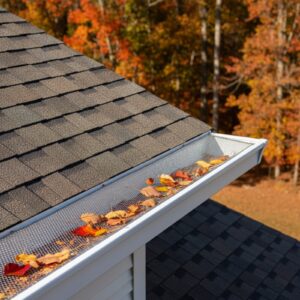
Water management at the roof edge is a big part of that first item. Pairing new siding with seamless gutters and gutter guards is one of the simplest ways to protect your investment, and many of our homeowners schedule both projects together.
What Does Fiber Cement Siding Cost Compared to Vinyl?
Fiber cement siding cost is almost always higher than standard vinyl, both for materials and labor. The boards are heavier, so crews move and hang fewer pieces per hour. Cutting them produces silica dust, which calls for proper saws and dust control. Trim details take longer, and boards that are not factory-finished need primer and paint after installation.
Vinyl keeps costs down because the panels are light, go up quickly, and arrive with color built in.
Your project’s price depends on:
- The total wall area and the number of stories
- How many windows, doors, and corners need trim
- Whether old siding has to be torn off and how much sheathing is damaged underneath
- The product line you choose, such as standard vinyl, insulated vinyl, primed fiber cement, or factory-finished fiber cement
Long-term value is where fiber cement narrows the gap: it lasts longer, handles hail better, and gives a home a more finished look at resale. We see that tradeoff often with homeowners pricing fiber cement and vinyl siding in Georgetown. We give every homeowner itemized pricing on both options so you can compare real numbers.
Is Hardie Board Worth It Over Vinyl?
For many homeowners, the hardie board vs vinyl siding question really means “Is the best-known fiber cement brand worth the premium?” James Hardie is the most recognized name in fiber cement, and it builds its products for regional climates. The company’s Hardie Zone System describes its HZ5 product line as engineered for climates with freezing temperatures, with a surface designed for paint adhesion and moisture resistance plus a drip edge for water management. We confirm the right product line for your address before ordering.
Hardie board tends to be worth it over vinyl when:
- You plan to stay in the home for 15 years or longer.
- Your home sits in an open area that takes the brunt of hail and wind.
- You want a painted-wood look with crisp lines and deep shadow lines.
- You are matching the character of an older home or a historic neighborhood.
That last point comes up often in our river towns and is a big part of our siding work in Frankfort and our siding replacement in Bardstown. If you like the look of wood but want something lighter than fiber cement, we also install LP SmartSide engineered wood.
Which Siding Is Right for Your Home?
After years of walking homeowners through the fiber cement vs vinyl siding decision, we find it usually comes down to a handful of honest questions. Answer these and the right material tends to become clear:
- How long will you live here? Selling within five to seven years favors quality vinyl. Staying for the long haul favors fiber cement.
- How exposed is the house? Homes on open lots in Danville, Richmond, and the farm country around Lexington take more wind and hail than homes tucked into mature neighborhoods.
- Do you want to paint? If repainting every decade sounds like a chore, choose vinyl or a factory-finished fiber cement product.
- What does the house call for? A trim-heavy Craftsman or farmhouse often looks best in fiber cement, while a simple ranch can look sharp in quality vinyl.
- What is your budget today? Financing can make the upgrade more realistic, but the best siding is the one you can install correctly and completely.
We offer a full range of siding installation and replacement services across Central Kentucky, so we can price every option side by side for your home.
What Does a Siding Project With MK Contractors Look Like?
We follow the same five-step process on every project, adapted here for siding. Our goal is full clarity at every stage, with no pressure and no surprises.
- Contact. Reach out to schedule a free siding consultation. Tell us what you are seeing, from cracked panels to peeling paint.
- Inspection. A member of our team visits your home, measures every wall, and checks for soft sheathing, failed flashing around windows, and water staining. You get a side-by-side quote for the materials that fit your goals.
- Installation. We schedule the work at a time that suits you, remove the old siding, repair any damaged sheathing, install house wrap and flashing, and hang the new siding to the manufacturer’s specifications.
- Clean-Up. We haul away old siding, packaging, and fiber cement offcuts, and sweep the yard for nails so the only thing left behind is your new exterior.
- Commitment. We do a final walkthrough with you to make sure you are completely satisfied, and every full siding replacement is backed by our 5-year workmanship warranty.
If you are interviewing more than one contractor, our list of questions to ask your siding contractor will help you compare bids on equal footing.
Frequently Asked Questions About Fiber Cement and Vinyl Siding in Kentucky
These are questions Central Kentucky homeowners often ask us during siding consultations.
Can fiber cement siding be installed over existing vinyl siding?
No. Vinyl has to come off first. Fiber cement needs a flat, solid wall with proper house wrap and flashing behind it, and vinyl panels leave a hollow, uneven surface. Tear-off also lets us find and repair rotted sheathing before it gets covered up again.
Why does vinyl siding sometimes warp near windows?
Sunlight reflecting off energy-efficient windows, either your own or a neighbor’s, can focus enough heat on a vinyl wall to distort the panels. Grills set too close to the house do the same. Fiber cement does not warp from reflected heat.
Does fiber cement siding have to be painted?
It depends on the product. Primed fiber cement must be painted after installation and typically needs repainting every 10 to 15 years, depending on sun exposure and paint quality. Factory-finished boards, such as James Hardie’s ColorPlus line, arrive with a baked-on color that holds up longer before needing attention.
Is insulated vinyl siding a good middle ground?
Often, yes. Insulated vinyl has a rigid foam backer bonded to each panel, which makes the siding stiffer, more impact resistant, and straighter on the wall than standard vinyl. It costs more than regular vinyl but less than most fiber cement, making it a smart compromise.
Can I use fiber cement on part of my house and vinyl on the rest?
Yes, and it is a popular approach. Many homeowners use fiber cement on the front for curb appeal and vinyl on the less visible sides to manage cost, with color and trim transitions planned so it looks intentional.
Ready to Compare Siding Options for Your Home?
Settling fiber cement vs vinyl siding is easier when you can see both priced for your actual home. Schedule your free siding estimate with MK Contractors LLC today, and we will walk you through every option with straight answers and no pressure.