We have all watched those massive summer storms roll across Shelbyville, dumping inches of rain in what feels like mere minutes. When the skies open up like that, your roof has a massive job to do. It has to collect thousands of gallons of water and funnel it safely away from your ceilings, walls, and foundation. But when your roof drainage system fails to keep up with the volume, that water does not just vanish. It backs up, pools in places it should not, and looks for any tiny weakness to enter your living space.
Dealing with water damage is incredibly stressful for any homeowner. The good news is that most roof drainage issues give you warning signs before they turn into a full-blown indoor flood. By understanding how your roofing system handles heavy rain, you can spot the weak points early and take action to protect your property. Let us take a practical look at why roof drainage goes wrong after a big storm and how you can fix it.
Key Takeaways for Managing Heavy Rain Drainage
- Clogged gutters are the primary cause of water backing up under your roof shingles.
- Water pooling near your foundation indicates that your downspout extensions are too short.
- Sagging gutters need immediate structural reinforcement to maintain the correct slope.
- Regular roof valley inspections prevent debris from creating dangerous water dams.
Why Do Gutters Fail to Route Water Correctly During a Storm?
The Hidden Danger of Overflowing Rain Channels
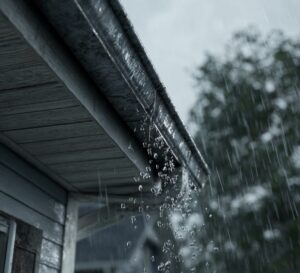
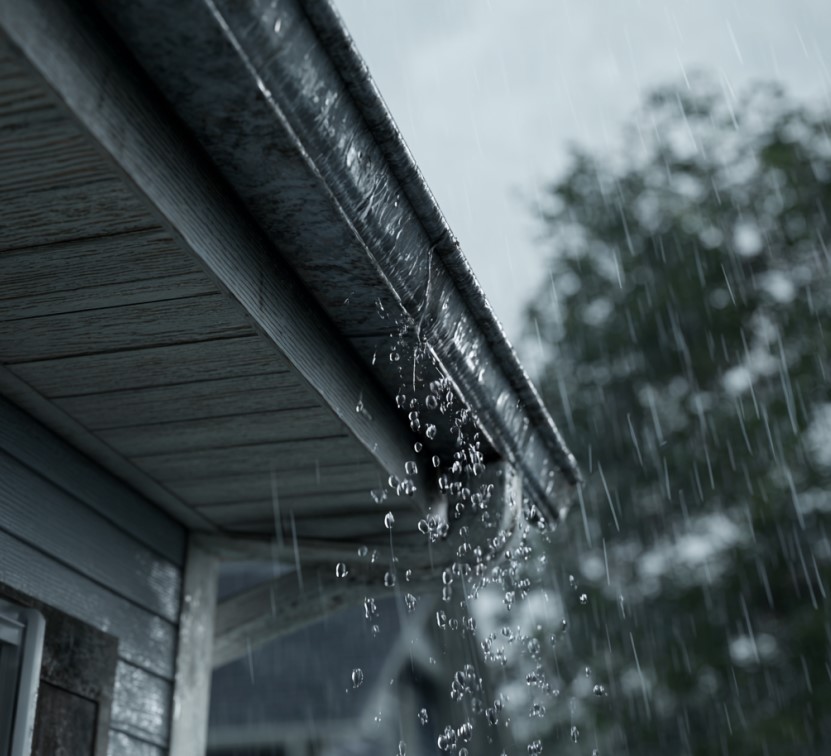
Your gutters are the unsung heroes of your roofing system. When heavy rain hits, they collect the runoff from the roof slopes and direct it to the downspouts. However, if your gutters are filled with twigs, leaves, and maple seeds, they turn into long, narrow swimming pools attached to your roofline. As the water fills up, it spills backward over the edge of the gutter channel.
This overflow is incredibly dangerous. Instead of falling safely away from your house, the water runs directly down your fascia boards and siding. Over time, this constant soaking rots the wood behind your gutters, causing the fasteners to pull free. Even worse, that overflowing water drops straight down next to your foundation, which can crack concrete walls and flood crawlspaces.
What Are the Most Common Drainage Weak Points on a Roof?
Areas That Require Extra Protection from Water Pooling
While gutters handle the edges of your roof, the surface itself has specific areas that are naturally prone to drainage trouble. The valleys where two different roof slopes meet carry an immense amount of water during a heavy downpour. If leaves or pine needles accumulate in these valleys, they create miniature dams that slow down the flow of water, forcing it to rise up and slide under your asphalt shingles.
Another critical area is the flashing around your chimney, vents, and dormers. According to the exterior experts at the National Roofing Contractors Association, flashing failures are responsible for a vast majority of residential roof leaks. When water cannot drain away quickly because of debris, it pools against these metal boundaries. If the old sealant has cracked, the water will find its way into your attic.

How Can You Fix Common Gutter and Downspout Problems?
Practical Upgrades for Better Storm Management
Fixing your roof drainage often comes down to improving the capacity and direction of your gutter system. If your gutters are clean but still overflow during normal rain, they may simply be too small for the pitch of your roof, requiring an upgrade to larger seamless gutter options.
Here are the most effective ways to optimize your drainage system before the next storm rolls into Shelbyville:
- Verify the gutter pitch: Gutters must slope downward toward the downspouts at a rate of one-quarter inch for every ten feet of running length to keep water moving.
- Add downspout extensions: Ensure your downspouts discharge water at least four to six feet away from your foundation wall to protect your basement.
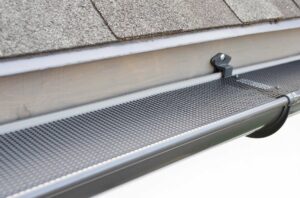
- Install sturdy gutter guards: Consider adding high-quality mesh covers to keep leaves out while letting heavy rain flow through smoothly.
- Check the hidden brackets: Tighten any loose gutter hangers to stop the channels from sagging and creating standing pools of water.
- Inspect the soffit ventilation: Ensure water is not wicking backward into your soffit vents, which can destroy your attic insulation.