If you live in Georgetown, Kentucky, you already know the weather doesn’t mess around. Between the spring downpours, summer storms, and fall leaf drop, your gutters are working overtime — or at least, they should be. The problem is, most homeowners don’t think about their gutters until water is pouring through the ceiling or the foundation is cracking. By then, a simple fix has turned into a serious bill.
Gutter drainage issues are one of the most common — and most overlooked — home maintenance problems in Georgetown. The good news? When you catch them early and understand what you’re dealing with, they’re very manageable.
Key Takeaways
- Clogged, sagging, and improperly pitched gutters are the most common drainage issues in Georgetown homes
- Poor drainage can damage your foundation, siding, landscaping, and basement
- Georgetown’s tree coverage and clay-heavy soil make gutter maintenance especially important
- Most issues are preventable with regular inspection and proper installation
- MK Contractors in Lexington, KY can diagnose and fix gutter problems before they become costly disasters
Why Do Georgetown Homes Have So Many Gutter Problems?
Georgetown’s climate and landscape create the perfect storm for drainage trouble.
Georgetown sits in the heart of the Bluegrass region, surrounded by beautiful hardwood trees — oaks, maples, sweet gums — that drop leaves, seeds, and debris straight into your gutters every single season. Add in the region’s heavy clay soil, which doesn’t absorb water well, and you’ve got conditions that put real pressure on your drainage system.
Georgetown also sees significant rainfall throughout the year, with spring and summer storms that can dump inches of water in a matter of hours. When gutters aren’t flowing freely, all that water has to go somewhere — and it usually goes somewhere you don’t want it.
What Happens When Gutters Get Clogged?
Water backs up, overflows, and starts doing damage in ways you can’t always see right away.
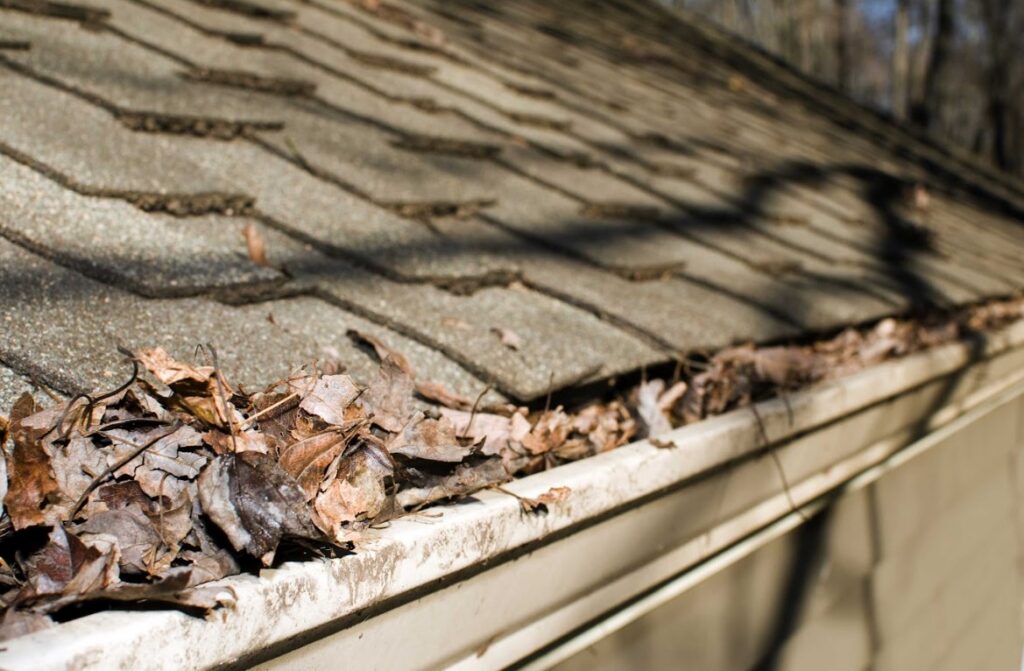
Clogged gutters are the number one drainage complaint among Georgetown homeowners. When debris blocks the flow, water pools in the channel and eventually spills over the sides. That overflow lands right next to your foundation, which is exactly where you don’t want standing water sitting.
Over time, this leads to:
- Foundation erosion and cracking as water saturates the soil around your home’s base
- Basement flooding and moisture intrusion, especially in older Georgetown homes with block foundations
- Fascia board rot where water sits against the wood behind the gutter
- Mold and mildew growth in crawl spaces and along exterior walls
- Landscape washout that destroys flowerbeds and grading around your home
The tricky part is that most of this damage happens slowly and out of sight. You might not notice anything is wrong until you’re dealing with a wet basement or a compromised foundation — problems that cost far more to fix than a gutter cleaning ever would.
Are Sagging Gutters Really That Big of a Deal?
Yes — and in Georgetown, they’re more common than most people realize.
A gutter that sags or pulls away from the fascia isn’t just an eyesore. It’s a drainage system that’s no longer doing its job. When the pitch is off, water pools in low spots instead of flowing toward the downspout. That standing water is heavy, and over time it puts stress on the hangers holding the gutter in place, making the sag worse.
Sagging is often caused by:
- Accumulated debris weighing down the channel over years
- Damaged or spaced-out hangers that can no longer support the gutter
- Fascia board rot that no longer holds fasteners securely
- Ice damming in winter months that bends and distorts the gutter shape
The fix is usually straightforward — new hangers, corrected pitch, and sometimes a section of replacement gutter — but it needs to happen before the gutter separates from the house entirely.
How Do You Know If Your Downspouts Are the Problem?
When water can’t exit the system, it backs up and creates pressure throughout the whole gutter line.
Downspouts are the exit ramps of your drainage system, and when they’re clogged, undersized, or poorly positioned, the whole system backs up. In Georgetown, downspout problems often come from a few familiar culprits: compacted debris from seed pods and small sticks, improper extensions that deposit water too close to the foundation, or downspouts that simply weren’t designed for the roof area they’re draining.
A good rule of thumb is that one downspout should serve no more than 30 to 40 linear feet of gutter. Many older Georgetown homes were built with fewer downspouts than they actually need, which means the system is always playing catch-up during a heavy rain.
If you notice water pouring over the top of your gutters during a storm even when they appear clean, a downspout that can’t keep up with volume is often the reason.
What’s the Difference Between a Quick Fix and a Real Solution?
Band-aids buy time. Proper repairs and installation solve the problem for good.
It’s tempting to grab a ladder and scoop out the gutters yourself, and honestly, that’s not a bad start. Regular cleaning — at least twice a year in Georgetown, more if you have heavy tree coverage — goes a long way toward preventing most issues.
But some problems need more than a cleaning. If your gutters are pulling away from the house, if water is consistently pooling near your foundation, or if you’re seeing signs of interior moisture, it’s time to bring in someone who can assess the full system. That means checking pitch, inspecting hangers and seams, evaluating downspout placement, and making sure water is being carried far enough away from your home’s foundation.
Your Gutter Questions, Answered
How often should Georgetown homeowners clean their gutters?
At minimum, twice a year — once in late spring after seed season and once in late fall after the leaves drop. Homes with heavy tree coverage may need cleaning three or four times annually.
Can I install gutter guards and forget about maintenance?
Gutter guards reduce how often you need to clean, but they don’t eliminate maintenance entirely. Some debris still gets through or sits on top of guards and restricts flow. They’re a helpful tool, not a permanent hands-off solution.
What’s the first sign something is wrong with my gutters?
Watch for water staining on your siding, peeling paint near the roofline, pooling water around your foundation after rain, or gutters that visibly pull away from the fascia. Any one of these is worth investigating.
Does homeowner’s insurance cover gutter damage?
It depends on the cause. Sudden damage from a storm may be covered. Damage from neglect or gradual wear typically is not. Regular maintenance is the best way to protect both your home and your coverage.
Ready to Stop Guessing and Start Fixing?
Your gutters do quiet, unglamorous work every single day. When they’re working right, you never think about them. When they’re not, the consequences show up in your foundation, your basement, your wallet — and your stress level.
If you’re in Georgetown or the surrounding area and you’re not sure whether your gutters are up to the job, don’t wait for a crisis to find out. Reach out to MK Contractors in Lexington, KY. They bring real expertise, straight answers, and the kind of work ethic that actually solves problems instead of just talking about them.
Give MK Contractors a call today and get a professional eye on your drainage system before the next big storm makes the decision for you.